

For many online video publishers, the idea of building an OTT app is not a new one. However, launching a robust video distribution system can seem like a much bigger challenge than it needs to be.
If you ask me, there aren’t many downsides to investing a little bit of time and resources into a good OTT app. Not only will you make your content more readily available for your existing audience, but you will also reach new users and unlock more revenue.
Do You Really Need an OTT App?
I am a big advocate for OTT video streaming, both as a consumer and someone who works in the video space. That said, when I tell you that having an OTT app in your roster comes with a long list of benefits, it’s not the bias talking. Here are some of the main advantages you can expect:
-
Expanded Monetization Opportunities – One of the biggest reasons video publishers venture into OTT is its monetization potential. From ad-supported VOD to paywalls, the various monetization models allow you to tailor the experience to your audience.
-
Audience Reach – According to Statista, global user penetration for OTT video is expected to exceed 60% by 2029. I don’t have to tell you that you’re missing out on a valuable chunk of viewers if you’re not using over-the-top channels.
-
User Engagement & Retention – In addition to attracting a new audience, OTT apps can help you engage and retain users. Features such as personalized recommendations, (dis)likes, and playlists allow viewers to tailor the watching experience to their own preferences.
-
First-Party Data – With an app, you will gain access to personalized data such as viewer preferences, demographics, behavioral information, and so much more. Needless to say, this can open many ad revenue opportunities.
Who Doesn’t Need to Build an OTT App?
OTT might be great, but I’d be lying if I said that absolutely everyone should launch an app. Certain business models wouldn’t benefit from it enough to go through the trouble (and costs) of building one.
For instance, if the only purpose of video content on your website is to monetize through instream ads (while potentially providing some added value to the main, text-based content), there isn’t much reason to go into OTT.
In this case, TargetVideo’s Managed Video Player would be a better option. With the Managed Player, publishers can easily monetize videos through relevant, premium ads. And if you don’t have enough video content (or any at all), the Player provides you with access to TargetVideo’s fully monetizable library of videos from the most popular niches.
One of the main challenges of running an OTT app, in most cases, is that it requires regular releases of new content. Otherwise, even with great audience attraction, your long-term retention will likely suffer. So if you don’t license or produce new content on a regular basis, building an OTT app might not be worth the effort.
Finally, if the video content you intend to distribute through the app is available elsewhere – for free – users won’t be too keen on providing login information or paying for it.


Follow TargetVideo on LinkedIn to stay up-to-date with the latest developments in the industry!
Follow UsMost Common Methods for OTT App Development
So you’ve decided that launching a streaming app is the right move for your business. What’s the next step? There are several ways you can go about building an OTT app, each with its own pros and cons.
Build It Yourself
If you want to ensure full control over every step of the app development and the tiniest design detail, building the app yourself (that is, hiring an app development team) is the way to go.
That said, building an app from scratch will also require considerable resources – both in terms of time and money. In my opinion, this option is not the best one for most video publishers. There are so many great white-label solutions and app builders out there that the price of DIY-ing an OTT app simply can’t be justified.
Pros:
-
Full control of development
-
Full control of app design and functionality
Cons:
-
Takes more time
-
Costlier than other solutions
Outsource the Building of an OTT App
If the idea of building an app from scratch still has you in a chokehold, but hiring an entire development team is not part of the plan, you can also consider outsourcing. There are many third-party development companies that can build the app for you for a portion of the price you’d pay an in-house team.
However, this comes with all the usual pitfalls of outsourcing. The ugly truth is that there is a lower level of control over the development process. Not to mention that, if you didn’t vet the company beforehand, you can run into a whole lot of trouble with unmet deadlines, poor execution, and so on.
Pros:
-
More cost-effective than in-house development
-
More extensive customization than white-label solutions
Cons:
-
Loss of control over development
-
Potential issues with security and confidentiality
Use a Third-Party Content Distributor
I know, I know – distributing your content on a third-party app isn’t exactly the same as launching an OTT app. However, if you’re just starting out, have limited funds, and your library is small, this is definitely an option to consider.
Rather than building, branding, and launching your own OTT app, consider using a third-party distributor, such as Tubi. This isn’t a long-term solution for a growing video business, but it can be a great starting point to get your content out there.
Pros:
-
No app development or maintenance
-
Already established audience reach
Cons:
-
Limited monetization (usually due to revenue sharing)
-
Limited or no branding
Choose a White-Label OTT App
Okay, back to launching your own app now. Customizing a white-label OTT app is a best-of-both-worlds kind of solution. The app script itself – with all of its accompanying infrastructure – already exists. However, the publisher has the freedom to brand and customize it as they please.
Choosing the right white-label solution, however, can be a bit of a daunting task. There are many (and I mean many) providers on the market. Each white-label solution is slightly different, and the right choice will depend on your preferences and budget.
For instance, some solutions may come with smart playlists, while others will require manual list generation. The extent of customizability also varies, and so does the price.
Pros:
-
No app development
-
Customizable, ready-made solution
Cons:
-
Limited control over functionalities
-
The extent of customization can vary
Does a white-label OTT app sound like the right solution for you? Learn more about TargetVideo’s white-label OTT solutions here.
TargetVideo Makes Building an OTT App Easy
All things considered, a white-label solution is the best choice for most publishers who want to launch an OTT app. It allows them to bypass high development costs and long waiting times.
Having no say in the background structure of the app might pose a hurdle for some publishers with very specific demands. However, today’s top white-label OTT apps come with such extensive customization that users won’t be able to tell the difference anyway.
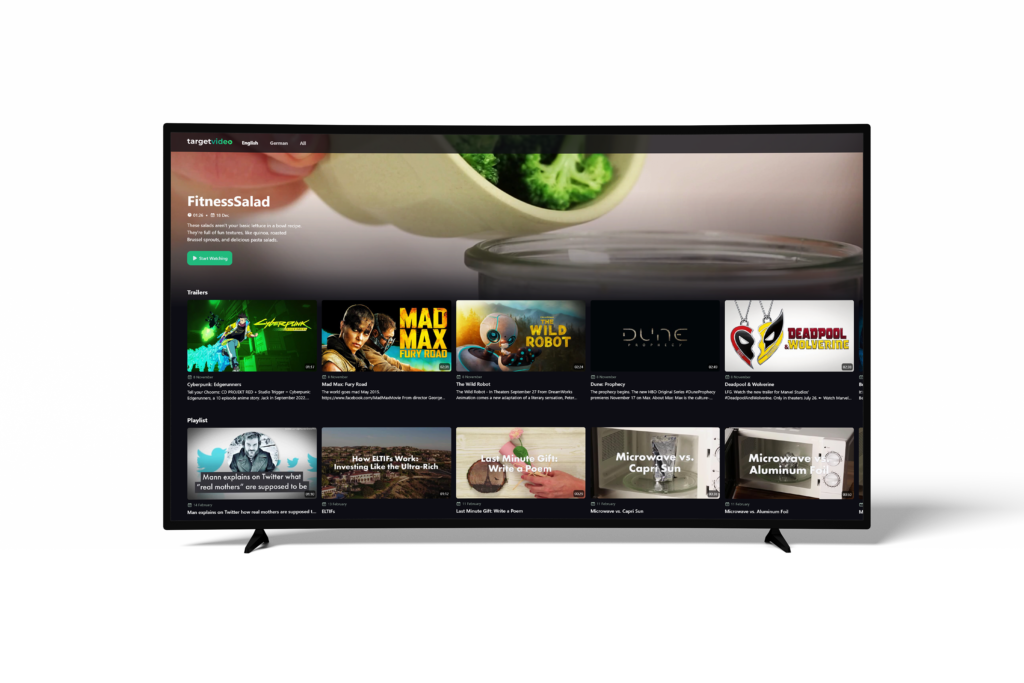
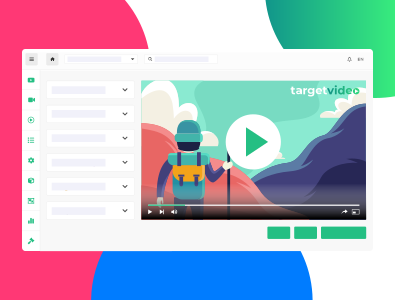
White-label OTT solutions make launching an app easier by default. TargetVideo’s OTT app builder goes a step further. With easy-to-navigate customization options, publishers can get their own OTT apps for web, mobile, and CTV within hours.
Get Started on Your OTT Journey
In addition to launching a unique, user-friendly OTT app, TargetVideo will help you monetize it through ads, as the video player comes with built-in ad-serving capabilities. As a TargetVideo publisher, you will also gain access to premium ad demand, unlimited secure video hosting, and a feature-rich, intuitive content management system.
Get in touch with our sales team to find out more about how TargetVideo can help grow your video business.
Full Control Over Monetization
The Most Advanced Ad Tech
Multi-Role Library Management
OTT Apps for All Channels
Smooth Live Streaming
And More!
Building OTT Apps: Frequently Asked Questions
Is OTT profitable?
Yes. OTT can be quite a profitable distribution channel for publishers, whether through ads, PPV, subscriptions, or a combination of these monetization models.
How can I earn from OTT?
There are multiple ways to earn from OTT. One of the most common methods is through OTT advertising, but subscriptions, single transactions, and hybrid models are all viable options.
What is OTT advertising?
OTT advertising is an ad channel that uses OTT streaming platforms to serve advertisements to viewers.
What is an OTT box?
An OTT box is a device that turns a television set into an OTT device. In other words, if your TV doesn’t have built-in smart capabilities, you can use an OTT box to download streaming apps and access content.
What is the difference between OTT and CTV?
While OTT (over-the-top) is the distribution method for all kinds of content, CTV (connected television) is a physical device, i.e. smart TV, used for streaming content over-the-top.


