

Piracy has been a widespread issue for over a decade, impacting all forms of online media, from videos and music to e-books and images. As a result, protecting content from unauthorized use has become a top priority for website publishers. That’s where Digital Rights Management (DRM) comes in — a technology designed specifically to prevent unauthorized access to digital content.
But what exactly is DRM, how does it work, and when should publishers use it? In this guide, I’ll break it all down, giving you a clear understanding of DRM and how it can safeguard your digital assets.
What Is DRM in Online Publishing?
DRM is a technology that protects digital copyright by managing and limiting access to copyrighted digital media. DRM software also includes various measures against unauthorized copying, distribution, and modification of said copyrighted materials.
DRM technology gives publishers and content creators full control over who can access their content and what they can do with it. It protects their IPs and prevents their work from theft and illegal distribution online. All of this makes DRM the cornerstone of any online business relying on the selling and distribution of exclusive and premium content. Although DRM doesn’t combat and pursue those who engage in piracy, it prevents your content from falling victim to it in the first place.


Follow TargetVideo on LinkedIn to stay up-to-date with the latest developments in the industry!
Follow UsDRM-Protected Content
DRM-protected content is any content that has various safeguards that limit how users can interact, edit, or distribute it. In other words, DRM protects publishers’ content in the following ways:
-
Prevent users from editing or saving content;
-
Limit or prohibit sharing or forwarding of a specific product or content;
-
Restrict or limit users from printing specific content;
-
Prevent users from screenshotting a product or content;
-
Set expiration dates on online documents, pieces of media, or content;
-
Lock specific content pieces for certain IP addresses, GEO locations, or devices;
-
Watermark visual or video content or documents to establish ownership.
As you can see, publishers and content creators have plenty of freedom and customization options for their DRM-protected content. That is the primary reason this technology is the go-to choice for piracy prevention for millions of businesses worldwide.
How Does DRM Protection Work
Digital rights management works by encrypting digital files and locking them behind a unique ID. This ensures that only specific devices or users that meet certain criteria can access them. In other words, it prevents third parties from accessing these media files without authorization.
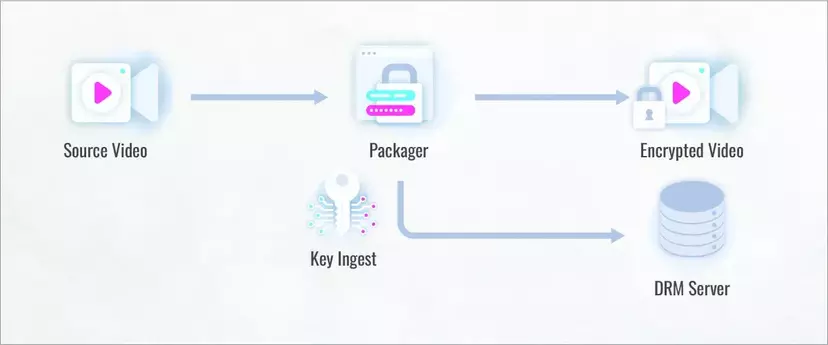
Here’s a step-by-step illustration of how DRM works on an example of online video:
- Encryption Key Generation: When the IP owner uploads a video file to their platform, the file gets a unique encryption key from the DRM provider. This key is uploaded to the DRM platform.
- Sending the Key: The platform encrypts the video file and sends the key and the necessary metadata to a license server for distribution.
- File Packaging: When the publisher uploads the video to their platform, the encrypted version of the file is packaged and sent instead.
- Access Verification Request: When a user tries to play content, the HTML5 video player sends a request to the owner’s proxy to verify whether they have the right to access the piece of content.
- Sending the Decryption Key: If the copyright holder’s website or service validates the user’s access rights, it communicates with the DRM platform and sends the license/decryption key to enable playback. The same process happens if the user tries to download the content.
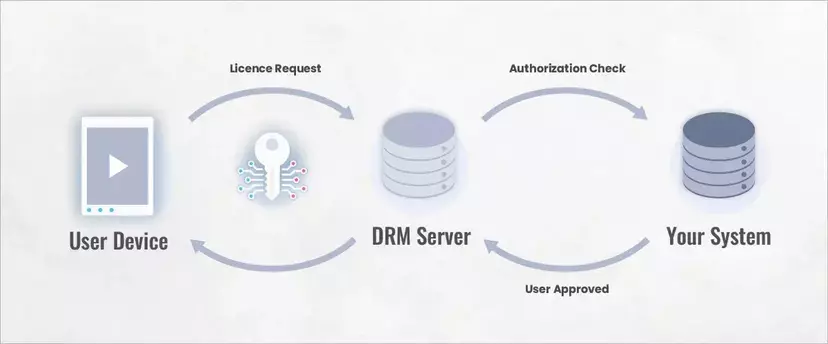
As you can see, the DRM system functions as a sort of lock that only a specific key (decryption key) can open. And since the license server is in charge of distributing these keys, only users with valid licenses (those who purchased the product) will be able to access your content.
Examples of DRM Protection in Practice
Now that you’re familiar with how DRM works, here are a few real-life examples of it:
- Apple iTunes — iTunes was one of the first services to implement DRM. It relies on it to control which users can access and download audio files. That prevents users from illegally distributing music without purchasing the rights to it.
- Music Streaming Services (e.g., Spotify) — Music streaming platforms like Spotify or Deezer use DRM technology to track the time users spend streaming different artists’ music and calculate the royalties each party gets for their work.
- Private Documents (e.g., Watermarking) — Many businesses worldwide use DRM to restrict access to their important documents. DRM lets them track the original versions of these files, any edits, and copies, and designate what people can alter in them. That is most useful when making long-distance contracts, as it improves these documents’ security and legitimacy.
- Computer Software (e.g., Microsoft Windows) — Most downloadable computer software nowadays comes with a unique license number and key that allow IP owners to track and control who has access to their content. One of the most famous examples is the Microsoft Office Suite.
- OTT Streaming Services (e.g., Netflix) — Dozens of OTT services like Netflix, Hulu, or Disney+ rely on DRM technology to ensure only users who’ve paid a subscription fee or bought a piece of content can stream it.
Despite its widespread use and versatility, DRM is not a be-all-end-all solution. In fact, not everyone needs to protect their digital IPs. Some industries rely (and depend) on users sharing their content and won’t have much use of DRM.
Why Publishers Need DRM
To stress the importance of DRM here are some statistics from 2024 that underline the current piracy issues in the digital world:
-
Pirated video content gets over 230 billion views a year.
-
The TV and film industries suffer up to $71 billion loss annually due to piracy.
-
Around 70,000 jobs are lost due to music piracy in the US alone.
-
Over 80% of online piracy is due to illegal video streaming services.
Simply put, publishers should consider getting DRM protection for the following reasons:
-
Data Protection — With DRM, publishers ensure that only those persons authorized to view a certain type of content can access it. This is especially important for confidential information where leaks could significantly impact the company’s operations.
-
Distribution Control — Aside from restricting direct access to content, DRM can ensure that those who have the authorization to view your videos cannot distribute them to those who don’t.
-
Brand Image Protection — Allowing users to freely access, edit, and distribute your content can result in the deterioration of the image your brand maintains in the public eye, be it due to the potential spreading of misinformation or poor content quality.
-
Regulatory Compliance — Ensuring compliance with industry regulations is crucial, especially for publishers that distribute third-party content. No production company will want to work with a publisher who can’t ensure the utmost safety and protection of their content.
If you’re a publisher using an ad-based (AVOD) model to monetize content, you may not need all DRM features. After all, your goal is to maximize views and shares to increase your ad revenue. However, protecting your content from unauthorized downloads is still important. Allowing users to download your content freely can result in potential revenue loss.
Protect Your Videos with TargetVideo
TargetVideo’s HTML5 video player is fully compatible with Google Widevine, Microsoft PlayReady, and iOS Fairplay DRMs. That means publishers using one of these DRM solutions can easily integrate them with our player to protect their content. If you aren’t using any of these providers but still want to protect your content from theft, you can do so with our third-party partner, EZDRM. You can contact our sales team to find out more.
Additionally, for publishers with VOD businesses and or large video libraries, TargetVideo provides an easy solution for proof of ownership. Our publishers can effortlessly embed custom Watermarks directly into their content.

They can add personalized watermarks through CMS when uploading new videos. This ensures their content is protected and identifiable.
Full Control Over Monetization
The Most Advanced Ad Tech
Multi-Role Library Management
OTT Apps for All Channels
Smooth Live Streaming
And More!
FAQ
1. What is DRM software?
DRM software is a program or solution that helps companies and brands protect their digital IPs and exercise greater control over how users can interact and what they can do with their content.
2. What is a DRM license?
A DRM license is a technological framework of encryptions that DRM software uses to protect copyrighted content online and prevent its illegal distribution.
3. What is DRM encryption?
DRM encryption is the process digital rights management software uses to encrypt copyrighted media files to prevent third parties and unauthorized users from accessing, editing, or sharing them illegally.
4. How does DRM encryption work?
DRM encryption works on the lock-and-key principle. Each encrypted file can be accessed only with a specific decryption key. The DRM software handles the distribution of these keys. That way, only users who have met specific criteria (e.g., paid for the content) can access these files.
5. What is protected by DRM?
You can use DRM to protect almost any kind of online media or content. Some of the content that can be protected includes but is not limited to:
- E-books
- Music
- Videos
- Images
- PDF files
- And more…
6. What is a DRM-protected file?
A DRM-protected file is a media file encrypted by DRM software to protect it from unauthorized access, editing, and copying.


