

As a more controlled sub-form of programmatic advertising, programmatic direct has become more widespread in digital advertising due to its combination of programmatic automation (automated buying and selling) and transparency that comes with pre-established direct deals, making it the perfect blend of programmatic and traditional. To showcase its full potential, in this article, I pointed out the key benefits of programmatic direct that might make you consider establishing more programmatic direct deals with your future partners. Let’s dive in!
What Is Programmatic Direct?
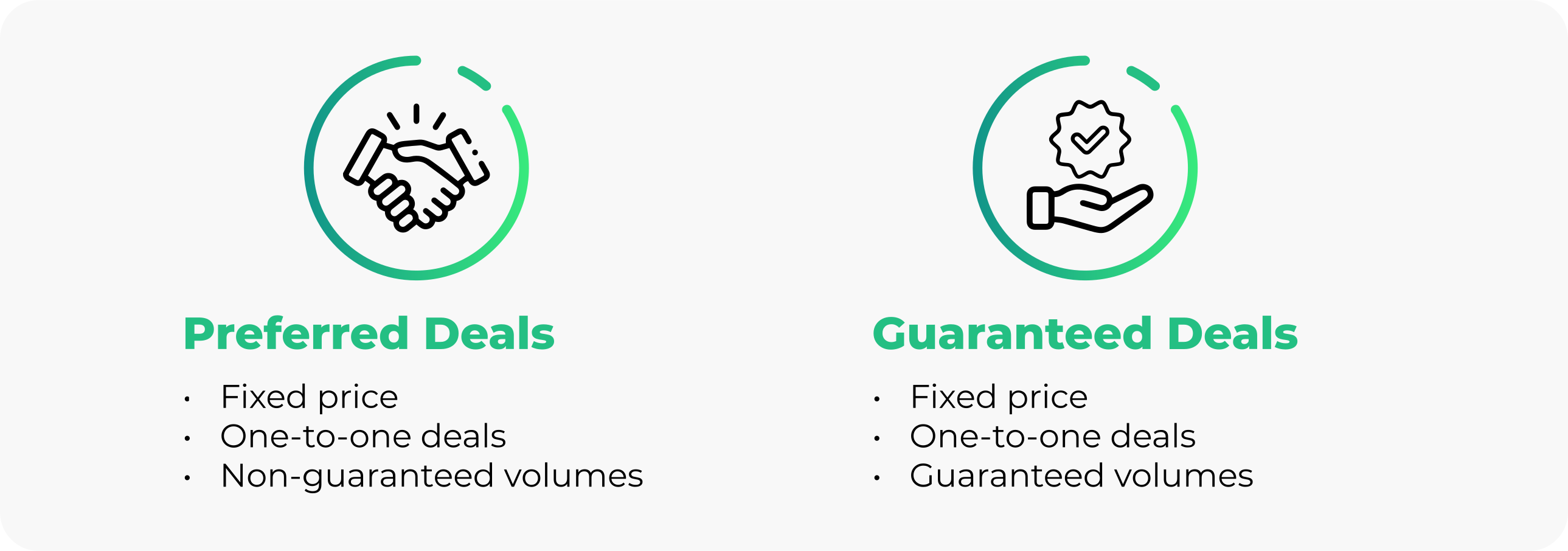
Unlike RTB, programmatic direct refers to the automated selling and buying of ad inventory based on direct deals between publishers and advertisers, not open or private auctions. These deals function based on one-to-one agreements that involve negotiations on pricing, ad placements, and targeting options. Programmatic direct can be:
-
Programmatic Guaranteed — Advertisers commit to purchasing a predetermined number of ad impressions, ensuring guaranteed delivery of their ads and, in turn, guaranteed publisher profit.
-
Preferred Deals — Advertisers are not obliged to purchase the ad inventory. They get an opportunity to place an offer at the negotiated price when there’s an ad request for the ad inventory in question. However, if the advertiser is not interested, the ad space is “forwarded” to an auction.
Benefits of Programmatic Direct
Programmatic direct has several advantages that enable publishers to monetize their ad inventory more effectively while giving them total control over their content. These include the following.
Higher Ad Yield
Programmatic direct allows publishers to sell premium ad inventory at higher prices than they would sell it at open exchanges or auctions. Publishers make direct deals with advertisers for exclusive ad placements, leading to higher ad yield. In addition, publishers are guaranteed profit due to pre-established conditions (programmatic guaranteed). For instance, advertisers usually commit to a certain number of ad impressions. This provides publishers with consistent revenue and helps prevent low fill rates.
Better Ad Inventory Control
Publishers have more control over which advertisers have access and priority over their inventory. They can hand-pick and grant access to advertisers who offer ads relevant to their website content or audience, determine optimal inventory prices, and apply predictive forecasting, making it easier to manage their costs. With greater control over their inventory, publishers can serve ads relevant to their users or content.
Transparency and Safety
This method provides transparency for both advertisers and publishers. Advertisers get insight into their ad viewability — whether their ads are visible, i.e., displayed in a suitable environment (before-the-fold, above-the-fold, video, banner, etc.) and served to their target audience. On the other hand, publishers gain access to detailed reporting metrics (ad analytics). They can monitor the running campaign performance and traffic on their website. This makes it easier to spot bot traffic and avoid ad fraud.
Automation
Although the programmatic direct process takes longer than standard real-time bidding, as it merges programmatic automation with traditional deal-making, it still offers the quality advantages of both approaches. Everything happens within a single programmatic platform — from finding partners to finalizing agreements and implementing code — all in one go. However, the deals are set up in a traditional way, involving negotiations on pricing, ad impression volume, and audience targeting (behavioral targeting or contextual targeting).
Disadvantages of Programmatic Direct
Although programmatic direct is a great opportunity to boost ad revenue, some publishers may face the following issues:
-
Requires additional workforce — Managing direct deals can be quite a handful — negotiations and setting up individual agreements with advertisers, trafficking, invoicing, etc. For an in-house operation, publishers need to recruit an expert team (ad ops, accountants or accounting automation, sales, etc). This entire process is difficult for any smaller publisher. Even larger publishers and networks feel the pressure of maintaining ad ops and sales teams, so they frequently turn to third-party agencies to handle direct deals, such as TargetVideo.
-
Hard to apply for smaller publishers — Direct deals rely on establishing relationships with advertisers. Publishers need to invest time and effort into seeking and securing direct agreements. To be more precise, publishers need to have a large pool of potential partners, which may not be possible for smaller publishers. In addition, since direct deals are for premium inventory, only premium publishers can really benefit from this method.
-
Not possible as a standalone strategy — Unless you’re a sought-after publisher, selling ad inventory by solely relying on direct deals is not a plausible strategy as it can cause lower fill rates. Incorporating direct deals with another model, for instance, prebid, is a more viable solution, giving publishers higher coverage of their website’s ad space.
Website Monetization Made Easy With TargetVideo
While Programmatic direct boosts publishers’ ad revenue, it isn’t sustainable as a standalone strategy. To achieve maximum ad yield, publishers must ensure that their ad space is fully covered. Not just their premium ad inventory. That’s why TargetVideo offers publishers both programmatic RTB and direct deals. Receive high-quality video ads from premium partners, get detailed insight into ad performance with our in-depth analytics, and boost your monetization efforts with Managed Ads Service — our team will do the entire setup and ad yield optimization for you with our extensive AI-driven tools and ad tech expertise.
Join TargetVideo Platform if you want full control over your content management, delivery, and video ad monetization or sign up for our Managed Video Player — if you want to let our experts handle all the work!


Plug & Play Monetization
Solution Free & Easy Integration
Ad Revenue Maximization
Rich Video Content Library
FAQ
1. What is programmatic direct?
Programmatic direct is the automated selling and buying of ad inventory based on direct pre-established deals between publishers and advertisers.
2. What are the advantages of programmatic direct?
The advantages of programmatic direct are higher ad yield, better control over inventory, transparency, and safety.
3. What is the difference between programmatic direct and programmatic guaranteed?
The difference between programmatic direct and programmatic guaranteed is that programmatic guaranteed commits advertisers to purchase a specific number of ad impressions, guaranteeing revenue.


